Product Update
Is Lightfilm Still in Business? (2026 Update)
Is Lightfilm from Shark Tank still around in 2026? The deal it made, the sharks who invested, and where to buy Lightfilm today.



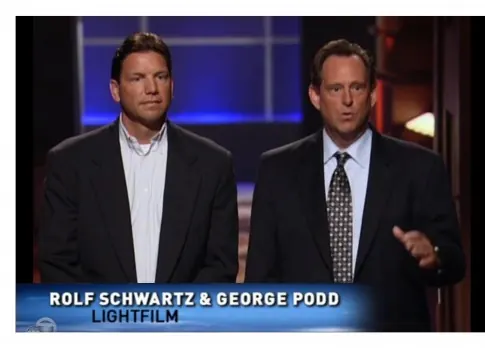
If you search for Lightfilm today and come up empty, that is not because the company failed. It is because the company changed its name. The LED-backlit car window decal that Rolf Schwartz and George Podd pitched in Season 2 is still around in 2026, just not under the name it used on stage in front of the sharks.
The Short Answer
Lightfilm is still in business, but you will not find it by searching that name on the company's own website anymore. The brand rebranded to PowerDecal, and PowerDecal is the name on the storefront today at powerdecal.com, complete with an active order form, tiered bulk pricing, and an As Seen on Shark Tank banner still displayed proudly at the top of the page.
So the product survived, the company survived, and it is still selling directly to customers years after the episode aired. It just goes by a different name now, which is exactly the kind of detail that trips up anyone searching for the original brand.
The Shark Tank Pitch
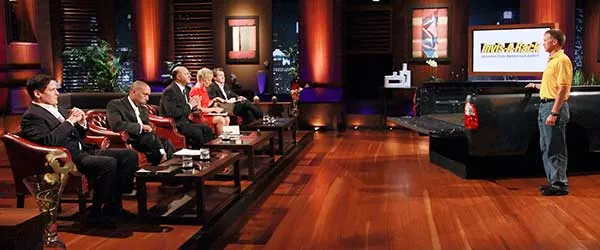
Lightfilm aired in Season 2, Episode 5, pitched out of Chicago, Illinois in the automotive category. Schwartz and Podd built a peel-and-stick decal for car windows that lit up automatically once it got dark outside, essentially a light-sensitive, battery-powered piece of vehicle flair that turned itself on and off without the driver doing anything.
The founders came in asking for 100,000 dollars in exchange for just 5 percent equity, a valuation ask of 2 million dollars for a fairly early-stage novelty automotive product. That is an aggressive number to defend in front of investors who spend their days finding reasons to say no.
The Deal That Got Done
Robert Herjavec and Daymond John teamed up on this one, which itself was a sign the sharks saw something worth partnering on rather than competing for. Per the deal terms on file for this company, the two sharks invested 10,000 dollars for 70 percent of the business, a steep departure from the 5 percent the founders had originally offered.
That kind of equity swing, a small headline number attached to a large ownership stake, usually signals the sharks saw more risk than opportunity in the original ask and priced accordingly. Schwartz and Podd took the deal anyway, trading a big chunk of the company for two well-connected retail and marketing partners in Herjavec and John.
From Lightfilm to PowerDecal
The most important thing that happened to this company after the show was not a product change, it was a name change. Lightfilm became PowerDecal, a rename meant to better describe what the product actually does, a light-up decal powered by a small battery pack and a light sensor, rather than lean on the more abstract Lightfilm branding.
Alongside the rebrand, the company reportedly grew its annual sales from around 100,000 dollars to more than 1 million dollars within about two years of the Shark Tank appearance, according to Shark Tank tracking coverage of the deal. That is a real growth curve, not just a marketing bump from a single television airing, and it lines up with a company that expanded its product catalog rather than coasting on novelty.
Where It Sells Today
PowerDecal now runs its own direct ordering system at powerdecal.com, and the site is built around volume more than one-off retail sales, with per-unit pricing that drops as order size increases, from 19.95 dollars a unit at smaller quantities down to 16.45 dollars a unit for orders of 240 or more. That pricing structure suggests the company leans on bulk buyers, promotional distributors, dealerships, and resellers as much as or more than individual consumers buying a single decal for their own car.
There is no Lightfilm branding anywhere on the current site, confirming the rebrand is total rather than a side label, and no current listing tying the product to a large marketplace like Amazon under either name. The founders' individual roles today are not detailed on the current site, which now presents itself simply as PowerDecal Holdings, LLC.
Lightfilm net worth in 2026
There is no independently verified net worth figure for Lightfilm or its successor PowerDecal, and no credible source publishes one for this specific company as of 2026. What is documented is the sales trajectory, growth from roughly 100,000 dollars to over 1 million dollars in annual sales within a couple of years of the Shark Tank appearance, which points to a real, functioning business rather than a shuttered one. Beyond that revenue signal, any specific dollar valuation for the company today would be a guess, and this page is not going to pretend otherwise. The safest honest read is that PowerDecal is a small but active bulk-and-retail operation, not a company with a publicly known net worth.
Where Things Stand Now
To recap, Lightfilm pitched in Season 2, Episode 5 out of Chicago, asked for 100,000 dollars for 5 percent, and closed a very different deal, 10,000 dollars for 70 percent, with Robert Herjavec and Daymond John. The company then did something a lot of Shark Tank alumni never manage: it rebranded cleanly, grew its revenue, and kept operating under the new PowerDecal name for years afterward.
So if you came here wondering whether Lightfilm is still in business, the answer is yes, it just is not called Lightfilm anymore. Look for PowerDecal instead, and the As Seen on Shark Tank banner on that site is your confirmation you have found the right company.
As an Amazon Associate, Shark Tank Index earns from qualifying purchases.
Where to buy Lightfilm
Still selling as of April 9, 2026. Check today's price and availability.
Affiliate link — we may earn a commission at no extra cost to you.
See the full Lightfilm deal breakdown and term sheet →