Product Update
Is Stem Center USA Still in Business? (2026 Update)
Is Stem Center USA from Shark Tank still around in 2026? The deal it made, the sharks who invested, and where to buy Stem Center USA today.
Stem Center USA pitched something rarer in the Tank than another gadget or snack, a hands-on STEM education franchise built by two sisters, and it walked out with a Lori Greiner handshake that, like more Shark Tank deals than viewers realize, never actually turned into a closed investment. The company kept teaching kids anyway.
The Short Answer
Stem Center USA is still in business and active in 2026. Per the fact sheet the company does not sell on Amazon, which makes sense given the business is an education service and learning-center model, not a physical product, and it operates through its own centers and partnerships rather than a retail storefront.
The Shark Tank Pitch
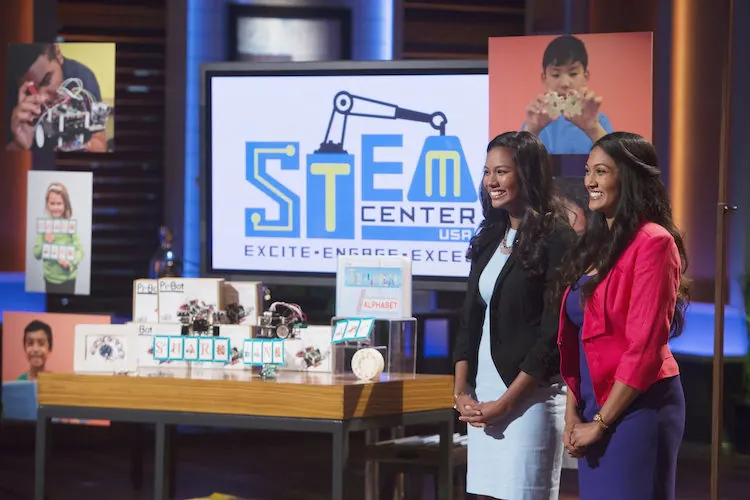
Sisters Lavanya Jawaharlal and Melissa Jawaharlal brought Stem Center USA to Season 7, Episode 6, pitching a hands-on learning center model for science, technology, engineering, and math education aimed at underserved students. They asked for 150,000 dollars in exchange for 15 percent of the company.
The pitch stood out for being a service and franchise model rather than a physical product, a category that Shark Tank features far less often, and the sisters framed the ask around scaling their existing centers into new markets rather than manufacturing and shipping a single item.
The Deal That Didn't Officially Close
Lori Greiner offered more than the sisters asked for, agreeing to 200,000 dollars for 20 percent equity, a larger investment at a slightly higher equity stake than the original ask.
According to post-show reporting, that agreement never officially closed. As with several other education and service-based Shark Tank deals, the review process that follows filming can surface complications that a straightforward consumer product deal never runs into, licensing structures, franchise agreements, and multi-location operating models all add legal complexity that a simple retail product doesn't carry.
Growing Through the Pandemic Without the Investment
What happened next is the more remarkable part of this story. Rather than the pandemic killing an in-person learning center business, as it did to many similar companies, Stem Center USA pivoted to virtual instruction and used that shift to build partnerships with more than 10 charter schools, turning a crisis into a distribution channel.
The company built physical creativity centers in Claremont and Rancho Cucamonga, California, alongside its virtual classes, custom learning kits, and seasonal workshops, a genuinely diversified model for a small education company. By its own reporting, Stem Center USA has served more than 43,500 migratory, English-learner, and underserved youth since 2011 through federally aligned equity-focused programs, a scale of documented impact that predates and outlasts the Shark Tank appearance itself.
Current annual revenue is reported around 2 million dollars, up from roughly 300,000 dollars before the show, entirely without the Greiner investment that never closed.
Stem Center USA net worth in 2026
Third-party estimates put Stem Center USA's annual revenue around 2 million dollars, up from an estimated 300,000 dollars before the Shark Tank appearance, with an estimated net worth around 8 million dollars. These figures are sourced to Shark Tank tracking and update coverage rather than to any audited company filing, since the business is privately held. Given that the company grew this revenue without the Lori Greiner investment that reportedly never closed, the growth trajectory itself is a stronger, more verifiable signal than the specific dollar figures attached to it.
Where Things Stand Now
Stem Center USA pitched hands-on STEM education in Season 7 and got a Lori Greiner yes on camera for 200,000 dollars at 20 percent, a deal that by most post-show accounts never officially closed.
The sisters built the business anyway, pivoting through the pandemic into virtual instruction and charter school partnerships while growing revenue roughly sixfold from its pre-show baseline. If you are here wondering whether the STEM education company from Season 7 survived, it did, and it succeeded on a model that ended up not needing the shark money the episode implied it had.
The Jawaharlal sisters have kept the mission of serving underserved youth central to how the company describes itself, rather than pivoting away from equity-focused programming toward a more purely commercial after-school-enrichment model once the business proved it could sustain itself, which is a notable choice for a company that no longer had a shark's money riding on hitting growth targets.
As an Amazon Associate, Shark Tank Index earns from qualifying purchases.
Where to buy Stem Center USA
Still selling as of June 10, 2026. Check today's price and availability.
Affiliate link — we may earn a commission at no extra cost to you.
See the full Stem Center USA deal breakdown and term sheet →