Product Update
Is Chi'lantro Still in Business? (2026 Update)
Is Chi'lantro from Shark Tank still around in 2026? The deal it made, the sharks who invested, and where to buy Chi'lantro today.


Jae Kim's kimchi fries built a cult following in Austin long before Shark Tank Season 8 came calling, and the food truck turned restaurant chain has since grown well past the version that pitched on national television. The twist is that the on-air deal with Barbara Corcoran never actually closed, which makes Chi'lantro's growth since then even more notable.
The Short Answer
Chi'lantro is still in business and expanding. The chain now runs 13 locations, reporting annual revenue somewhere between 14 million and 17 million dollars, a scale that dwarfs the single food truck and handful of storefronts it operated when it pitched in Season 8.
You can order directly through the company's own site and mobile app, and the brand also partners with DoorDash, Uber Eats, and Postmates for delivery. It does not sell through Amazon, which makes sense for a fast-casual restaurant chain rather than a shippable product.
The Shark Tank Pitch
Chi'lantro pitched in Season 8, Episode 8, out of Texas, in the food and drink category. The concept fused Korean barbecue with Mexican street food format, built around the now-signature kimchi fries, and had already built a devoted local following in Austin before the national audience ever saw it.
The founders asked for 600,000 dollars for 15 percent equity, valuing the growing food truck and restaurant business at 4 million dollars going into the pitch.
The Deal That Fell Apart
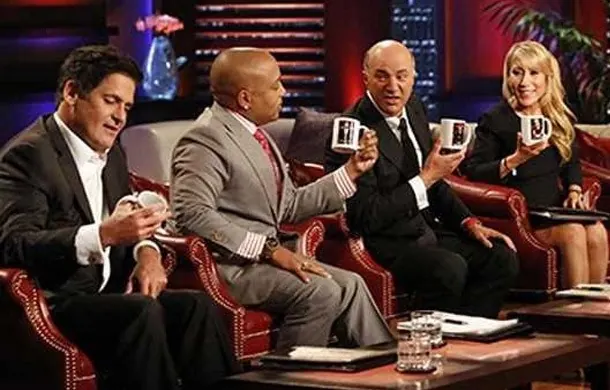
Barbara Corcoran agreed on camera to fund the company at 600,000 dollars for 20 percent equity, a larger stake than the 15 percent on the table but a deal nonetheless. That handshake never turned into an actual investment. The deal fell through after the show, for reasons that were never publicly detailed in depth.
What did not fall through was the exposure. National television coverage of a regional Austin food truck chain delivered a marketing boost that a lot of companies pay far more than 600,000 dollars to buy, and Chi'lantro appears to have used that attention effectively without ever needing the capital that almost came with it.
Growth Without the Shark's Money
By October 2022, Chi'lantro had opened its tenth location. By spring 2023, an eleventh restaurant opened in Houston, extending the brand beyond its Austin home base for the first time. The company today operates across Austin, Houston, and San Marcos, Texas.
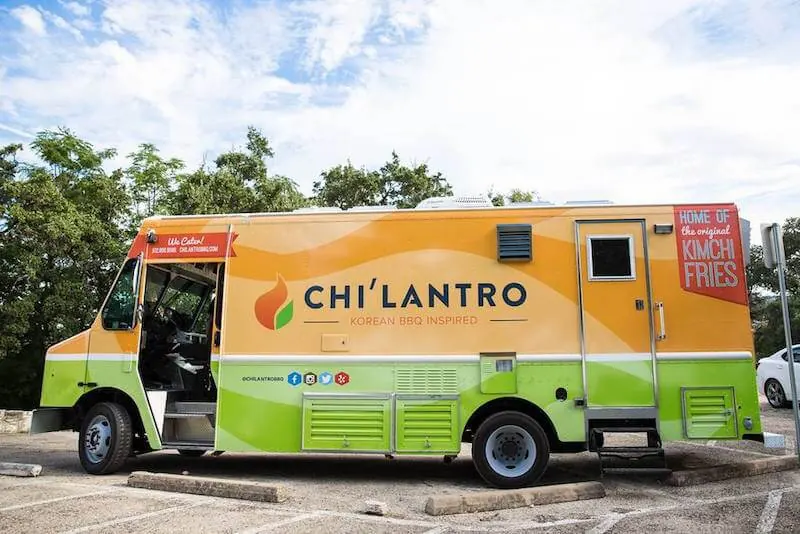
Beyond the storefronts, the business built out catering services and kept a fleet of the original food trucks running alongside the brick-and-mortar locations, giving it multiple revenue channels instead of depending entirely on dine-in traffic. That diversification, plus the delivery app partnerships, is a meaningfully more mature operation than the single truck that first pitched to the sharks.
Jae Kim has stayed at the helm through all of it, which matters for a restaurant brand built heavily around his own personal story of pairing Korean flavors with Tex-Mex format. A founder-led growth story tends to hold a chain's identity together in a way that a private equity rollup rarely manages.
Chi'lantro net worth in 2026
Shark Tank tracking coverage puts Chi'lantro's annual revenue in the 14 million to 17 million dollar range based on its current 13-location footprint. Applying typical fast-casual restaurant valuation multiples to that revenue range would suggest a company worth well into eight figures, but no confirmed company-wide valuation has been published.
Because Chi'lantro is privately held and the Shark Tank deal never closed, there is no equity transaction to anchor a hard number to. Treat any specific net worth figure you see attached to Jae Kim or the company as an estimate derived from revenue, not a confirmed valuation.
What can be said with confidence is that the company grew from a single food truck's revenue base to a 13-location, multi-channel restaurant business almost entirely on its own capital, which is a stronger indicator of underlying financial health than a pitch-day valuation from Season 8 ever could be.
Where Things Stand Now
Here is the recap. Chi'lantro pitched in Season 8 out of Texas asking for 600,000 dollars for 15 percent, Barbara Corcoran agreed to the deal on air at 20 percent, and it never closed after the cameras stopped.
None of that stopped the company. Thirteen locations, expansion into Houston, catering, a food truck fleet, and delivery app partnerships add up to a business that grew on its own terms after the TV appearance rather than because of the capital that almost arrived. If you're wondering whether Chi'lantro made it, the kimchi fries answer is a confident yes.
As an Amazon Associate, Shark Tank Index earns from qualifying purchases.
Where to buy Chi'lantro
Still selling as of February 2, 2026. Check today's price and availability.
Affiliate link — we may earn a commission at no extra cost to you.
See the full Chi'lantro deal breakdown and term sheet →